


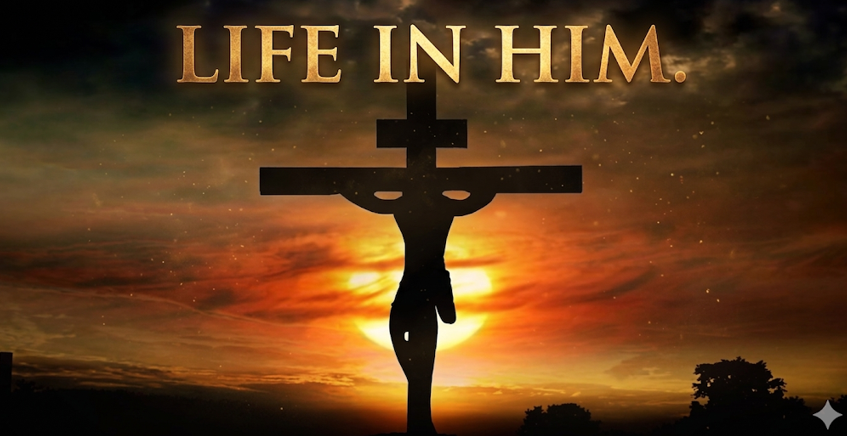
In a fast-paced world where we are constantly chasing success, happiness, and the next big milestone, we rarely pause to reflect on the concepts of sacrifice, suffering, and unconditional love. Yet, these are the very themes that define one of the most significant and profoundly moving days in human history, and Good Friday 2026 offers a poignant opportunity to slow down and consider their timeless meaning in our lives.
For billions of Christians around the globe, Good Friday is not just a holiday; it is a day that altered the course of history. It is a day of deep solemnity, quiet reflection, and overwhelming gratitude.
As we approach Good Friday 2026, which falls on April 3, 2026, many people—both within and outside the Christian faith—find themselves asking similar questions. What exactly happened on this day? Why do we call a day of execution “good”? How can a story that is over two thousand years old apply to our modern lives today?
Whether you are a devout believer preparing your heart for Holy Week, a student of history fascinated by ancient Rome and Jerusalem, or simply a curious soul wanting to understand global cultures, this comprehensive guide is for you. We will walk through the history, the global traditions, the deep spiritual significance, and the profoundly human lessons we can all take away from Good Friday.
What is Good Friday?
Good Friday is a crucial day of observance during Holy Week, the most sacred week in the Christian liturgical calendar. Holy Week begins with Palm Sunday (commemorating Jesus’ triumphant entry into Jerusalem) and culminates on Easter Sunday (celebrating His resurrection).
Good Friday specifically commemorates the arrest, trial, crucifixion, and death of Jesus Christ at Calvary (also known as Golgotha, the “Place of the Skull”) in first-century Judea.
Unlike the joyous celebrations of Christmas or Easter, Good Friday is marked by an atmosphere of mourning. Churches are often stripped of their decorations, the altars are left bare, and bells remain silent. It is a day of fasting, penance, and prayer, recognizing the immense physical and spiritual agony that Jesus endured.
The Great Paradox: Why is it Called “Good” Friday?
This is perhaps the most frequently asked question about the day. If this day marks the torture and brutal execution of an innocent man, why on earth do we call it “Good”? Wouldn’t “Sad Friday” or “Tragic Friday” be more accurate?
There are two main reasons for this terminology, one rooted in linguistics and the other in theology.
1. The Linguistic Origin
Historically, language evolves. Many linguists and historians believe that the word “good” in Good Friday is derived from an older English usage where “good” meant “holy.” Therefore, it was originally known as “Holy Friday” (which is still the term used in many Romance languages, such as Viernes Santo in Spanish or Vendredi Saint in French).
Another theory suggests it is a corruption of “God’s Friday,” much like how the word “Goodbye” evolved from the phrase “God be with ye.”
2. The Theological Meaning
On a spiritual level, the day is considered “good” because of what the outcome meant for humanity. According to Christian doctrine, humanity was separated from God by sin. The only way to bridge that gap was through a perfect, sinless sacrifice.
Jesus Christ willingly took on the punishment that humanity deserved. Therefore, while the events of the day were horrific, the result of the day—the redemption of humanity, the forgiveness of sins, and the opening of the gates of heaven—is the ultimate “good.” As the saying goes, “It was a bad day for Jesus, but a good day for humanity.”
The Historical and Biblical Story: What Happened on Good Friday?
To truly grasp the weight of Good Friday 2026, we must travel back in time to the dusty streets of ancient Jerusalem. The story of Good Friday does not begin on Friday morning; it actually starts the night before, on Maundy Thursday.
The Last Supper and Betrayal
On Thursday evening, Jesus gathered His twelve disciples for a final Passover meal. During this supper, He washed their feet—a profound act of humility—and instituted the Holy Communion, breaking bread and sharing wine as symbols of His soon-to-be-broken body and spilled blood.
After the meal, Jesus went to the Garden of Gethsemane to pray. He was in such deep psychological distress about the impending torture that, according to the Gospel of Luke, He sweat drops of blood. Despite His fear, He surrendered to God’s will, saying, “Not my will, but yours be done.”
It was in this garden that Judas Iscariot, one of His own disciples, betrayed Him to the religious authorities for thirty pieces of silver, identifying Him with a kiss. Jesus was arrested in the dead of night.
The Trials
Throughout the early hours of Friday morning, Jesus was dragged through a series of mock trials.
- The Jewish Leaders (Sanhedrin): They accused Him of blasphemy for claiming to be the Son of God.
- Pontius Pilate: Because the Jewish leaders did not have the authority to execute someone under Roman law, they took Him to the Roman Governor, Pontius Pilate.
- King Herod: Pilate sent Him to Herod, who mocked Him and sent Him back.
- The Final Verdict: Pilate, finding no true fault in Jesus but wanting to appease a rioting crowd, offered to release a prisoner. The crowd chose to release Barabbas, a known murderer, and shouted for Jesus to be crucified. Pilate literally washed his hands of the situation and handed Jesus over to be executed.
The Scourging and the Walk to Calvary
Before the crucifixion, Jesus was subjected to brutal Roman scourging. He was whipped with a flagrum (a whip laced with pieces of bone and metal). The soldiers mocked Him, twisting a crown of sharp thorns and pressing it into His scalp, dressing Him in a purple robe, and striking Him while shouting, “Hail, King of the Jews!”
Weak, bleeding, and exhausted, Jesus was forced to carry His own heavy wooden cross through the streets of Jerusalem to Golgotha. This painful journey is famously known as the Via Dolorosa (The Way of Suffering) or the Stations of the Cross.
The Crucifixion
At Golgotha, heavy iron nails were driven through His wrists and feet, anchoring Him to the cross. He was raised up between two thieves. Crucifixion was a horrific method of execution designed by the Romans to maximize pain and prolong death, which usually came through asphyxiation.
From 9:00 AM until 3:00 PM, Jesus hung on the cross. At noon, the Bible records that the sky turned completely dark for three hours. Finally, at 3:00 PM, Jesus breathed His last breath. At that exact moment, the massive veil in the Jewish Temple—which separated the Holy of Holies from the rest of the temple—was torn in two from top to bottom, symbolizing that humanity now had direct access to God.
The 7 Last Words of Jesus on the Cross
One of the most profound traditions observed on Good Friday is meditating on the “Seven Last Words” (or seven last statements) of Jesus while He was on the cross. These statements offer a deep look into His human suffering and His divine grace.
- “Father, forgive them, for they know not what they do.” Even in His most agonizing pain, Jesus’ first thought was not of revenge, but of forgiveness for the very soldiers who were killing Him.
- “Truly, I say to you, today you will be with me in Paradise.” Spoken to the repentant thief hanging next to Him, showing that it is never too late for salvation and grace.
- “Woman, behold your son… Behold your mother.” Looking down at His grieving mother, Mary, and His beloved disciple, John, Jesus ensured that His mother would be cared for after His death. It is a beautiful moment of human compassion.
- “My God, my God, why have you forsaken me?” A cry of deep spiritual agony. Theologians explain that as Jesus took on the sins of the world, He experienced a momentary separation from God the Father—a pain worse than the physical nails.
- “I thirst.” A stark reminder of His physical humanity. He experienced extreme dehydration and shock.
- “It is finished.” This was not a cry of defeat, but a shout of victory. The Greek word used is Tetelestai, an accounting term meaning “paid in full.” The debt of human sin was completely paid.
- “Father, into your hands I commit my spirit.” With His final breath, He willingly surrendered His life back to God, dying with peaceful trust.
How is Good Friday Observed Worldwide?
Because Christianity spans the globe, the observation of Good Friday takes many different cultural forms, ranging from quiet church services to dramatic public displays.
Church Services and the Veneration of the Cross
In Catholic, Anglican, and Orthodox traditions, the Good Friday service is highly solemn. It is usually held around 3:00 PM (the time Jesus is believed to have died). The service does not include the Eucharist (Holy Communion) in the traditional sense, as no bread or wine is consecrated on this day. Instead, worshippers participate in the “Veneration of the Cross,” coming forward one by one to kiss or touch a wooden cross as a sign of respect and gratitude.
Hot Cross Buns in the UK
In the United Kingdom, Australia, and parts of the Commonwealth, it is a long-standing tradition to eat Hot Cross Buns on Good Friday. These sweet, spiced buns are marked with a cross on top (representing the crucifixion) and contain spices that symbolize the spices used to embalm Jesus’ body.
Passion Plays in Latin America and the Philippines
In many Hispanic cultures, communities stage massive, elaborate “Passion Plays”—theatrical reenactments of the trial and crucifixion. In the Philippines, this devotion is sometimes taken to extremes, with some devotees voluntarily allowing themselves to be briefly nailed to crosses or flogging themselves as an act of extreme penance, although the Catholic Church officially discourages these dangerous practices.
Kite Flying in Bermuda
In a unique and beautiful tradition, the people of Bermuda fly colorful homemade kites on Good Friday. The flying kite symbolizes Jesus’ ascension to heaven, and the wooden sticks forming the frame of the kite represent the cross.
How is Good Friday Observed in India?
In India, Good Friday is a recognized national public holiday. Even though Christians form a minority of the population, the day is marked with deep respect across the country.
- Solemn Services: In states with significant Christian populations like Goa, Kerala, Maharashtra (including Mumbai and your city, Nagpur), and the Northeastern states, churches hold special afternoon services. The atmosphere is quiet and sorrowful.
- The Bitter Drink: In some Indian churches, especially in Kerala, there is a tradition of drinking a bitter concoction made of vinegar and leaves after the Good Friday service. This symbolizes the sour wine mixed with gall that was offered to Jesus on the cross.
- Way of the Cross: Many parishes organize outdoor processions replicating the Stations of the Cross. Devotees walk through the streets, carrying wooden crosses and singing solemn hymns in regional languages like Hindi, Marathi, Malayalam, and Tamil.
Good Friday vs. Easter Sunday: The Journey from Dark to Light
It is impossible to fully understand Good Friday without looking ahead to Easter Sunday. The two days are the ultimate representation of the human experience: despair and hope, death and life.
- Good Friday is the day of absolute darkness. It represents the moments in our lives when everything seems lost, when betrayal hurts the most, and when pain feels insurmountable. The disciples thought it was over. Their leader was dead, and their hopes were crushed.
- Easter Sunday, which occurs three days later, celebrates the Resurrection of Jesus from the dead. It is a day of vibrant joy, proving that death did not have the final say.
The core message of the Holy Week timeline is this: You cannot have the joy of Easter Sunday without going through the pain of Good Friday. —
The Human Touch: Life Lessons from Good Friday
You do not have to be a devout Christian to draw profound, life-changing lessons from the story of Good Friday. The narrative touches upon the deepest chords of human psychology and emotional resilience.
1. The Power and Freedom of Forgiveness
When Jesus said, “Father, forgive them,” while literally being tortured, He set the ultimate standard for forgiveness. In our modern lives, we hold onto grudges for years over minor insults. We let bitterness poison our mental health. Good Friday teaches us that forgiveness is not about letting the offender off the hook; it is about freeing your own heart from the prison of hatred. If Jesus could forgive His executioners, we can learn to forgive those who have wronged us in our personal and professional lives.
2. Enduring the “Crosses” of Life
Everyone carries a cross. Your cross might be a chronic illness, financial ruin, a toxic relationship, the loss of a loved one, or a battle with depression. Carrying it is exhausting, and sometimes, like Jesus, you might fall under its weight. Good Friday reminds us that suffering is a universal human experience. But it also teaches us to keep walking, step by step, enduring the pain with dignity and leaning on others (like Simon of Cyrene, who was forced to help Jesus carry His cross) when the weight becomes too much.
3. The Reality of Betrayal and Loyalty
The story features two contrasting friends: Judas, who sold Jesus out for money, and John, who stayed by the cross until the bitter end, risking his own life. Good Friday forces us to look at our own social circles. Who are the “Johns” in our lives who will stand by us when we are at our lowest? And more importantly, what kind of friend are we?
4. Hope is Born in the Darkest Hours
When Jesus was placed in the tomb on Friday evening, a giant stone was rolled over the entrance. For the disciples, it was the end. But the story teaches us that sometimes, when we feel we have been completely buried by life’s circumstances, we are actually just planted. A period of darkness in your life is often the necessary precursor to a beautiful “resurrection” or comeback.
How to Observe Good Friday 2026 Meaningfully
If you want to observe Good Friday this year in a way that truly impacts your spirit, here are a few simple, human ways to do it, regardless of your background:
- Digital Detox: Disconnect from the noise of social media, news, and endless scrolling from 12:00 PM to 3:00 PM. Use those three hours to sit in silence, meditate, or read.
- Practice Forgiveness: Reach out to someone you have been harboring anger towards. You don’t have to become their best friend, but release the grudge. Send a text, make a call, or simply forgive them in your heart.
- Acts of Charity: The truest way to honor a day of sacrifice is to sacrifice something of your own for someone else. Donate the money you would have spent on a fancy dinner to a local orphanage or a food bank in your city.
- Attend a Service: If you are open to it, visit a local church service to experience the solemnity and beautiful hymns of the day. The quiet, contemplative atmosphere is incredibly grounding.
- Fasting: Try fasting for the day, or give up your favorite comfort food. Physical fasting often brings mental clarity and builds self-discipline.
Frequently Asked Questions (FAQs) About Good Friday
Q: Is Good Friday a happy or sad day? A: It is primarily a solemn and mournful day because it marks the torture and death of Jesus. However, it carries an undercurrent of quiet gratitude, because Christians believe that this sacrifice was necessary for the forgiveness of humanity’s sins.
Q: Can we eat meat on Good Friday? A: In the Catholic tradition, believers are strictly required to abstain from eating meat (beef, pork, chicken) on Good Friday. Fish is traditionally permitted. Many people also observe a strict fast, eating only one full, simple meal during the entire day.
Q: What is the exact date of Good Friday 2026? A: Good Friday will be observed on April 3, 2026.
Q: Why does the date of Good Friday change every year? A: The date is tied to Easter Sunday, which is a movable feast based on the lunar calendar. Easter is always the first Sunday after the first full moon following the vernal equinox (the first day of spring). Good Friday is always the Friday immediately preceding Easter Sunday.
Q: Do you say “Happy Good Friday”? A: No, greeting someone with “Happy Good Friday” is generally considered inappropriate due to the somber nature of the day. It is better to say, “Have a blessed Good Friday,” or simply wish them a meaningful Holy Week.
Conclusion
As the sun sets on Good Friday 2026, let it serve as a powerful reminder to slow down. In our relentless pursuit of tomorrow, we must not forget the sacrifices made for us yesterday. Good Friday is not merely an ancient historical event; it is a mirror reflecting our own capacity for suffering, our desperate need for forgiveness, and the limitless, unconditional love that the Divine has for humanity.
Whether you spend the day in a pew at church, in quiet meditation at home, or simply trying to be a more forgiving human being at work, let the solemnity of Good Friday penetrate your heart. Remember the darkness of the Friday, but hold onto hope—because Sunday is always coming.